Latin Side
of Chick Corea
My Afro-Caribbean masters were Mario Bauza, Eddie Palmieri, and Tito Puente. Under their
leadership, we spent thousands of nights performing in dance clubs in New York City and jazz
clubs and concert halls around the world. Eddie told us that, for sure, we earned our Salsa badge.
The “Latin Side of” series had its roots when I was performing with Eddie’s Afro-Caribbean Jazz
Septet in the early 1990s. We would play night after night, diving into Eddie’s compositions like
“Azucar”, “Vanilla Extract”, and “EP Blues.” Spontaneously, we would weave in elements from
John Coltrane’s “Impressions” or “Blue Train.” One day, while exchanging thoughts about
potential projects with my friend Bob Belden, we came up with the idea of recording John
Coltrane’s music in clavé. Astor Place Records agreed to record it, and things took off. I was
fortunate to have some of the greatest musicians in the world join me, including Eddie Palmieri,
Danilo Perez, Brian Lynch, Ronnie Cuber, and an incredible rhythm section with Adam Cruz,
Richie Flores, Milton Cardona, Andy Gonzalez, and John Benitez. The result became “The Latin
Side of Coltrane,” which received a Grammy nomination, and it felt natural to keep the
momentum going. We started performing regularly at the Blue Note in New York City and
recording for Half Note Records, eventually exploring the music of Miles Davis, Wayne Shorter,
Herbie Hancock, and Joe Henderson. A big thank you to Steven Ben-Susan and Jeff Levenson
for their production work. Later, for Savant Records and Barney Fields, we recorded “Latin
Side” projects devoted to Horace Silver, Charles Mingus, and McCoy Tyner. It has been an
organic journey and a blessing to honor the music of these great men. For me personally,
performing with legends like Miles, Joe Henderson, Horace, and McCoy was a dream come true,
and reimagining their music through an Afro-Caribbean lens has been an honor and incredible
experience.
Now we have set our sights on another giant and embarked on the project of honoring the genius
of Chick Corea, one of jazz’s most influential and adventurous composers.
Chick was a true pioneer of post-60’s musical exploration. His tunes are deeply rooted in the
sophistication of modern jazz as well as Latin rhythms, Spanish influences, and Afro-Caribbean
traditions. He started out with Mongo Santamaria on the 1962 album “Go Mongo”. This
collaboration shaped his musical and compositional approach. Later, his experience with Miles
Davis and collaborations with some of the greatest musicians on the planet like Roy Haynes, Joe
Chambers, Jack DeJohnette, Airto, Miroslav, Dave Holland, Stanley Clarke, Joe Farrell, Steve
Grossman, Benny Maupin, Woody Shaw, and Hubert Laws were the launchpad for his creative
compositional genius. From the lyrical, translucent grace of “Crystal Silence” to the rhythmic
incandescence of “Spain,” Chick’s music has always held huge possibilities for expansion and
reinterpretation. In this recording, we set out to explore Chick’s repertoire, covering some of his
most familiar compositions and his cutting-edge modern jazz breakthroughs. His recordings
“Tones for Joan’s Bones”, “Now He Sings, Now He Sobs”, “Inner Space”, and “Sundance” are
all modern jazz classics. Chick continued his amazing innovation into the world of jazz fusion
with “Return to Forever” and “Light as a Feather”. These groundbreaking recordings comprise
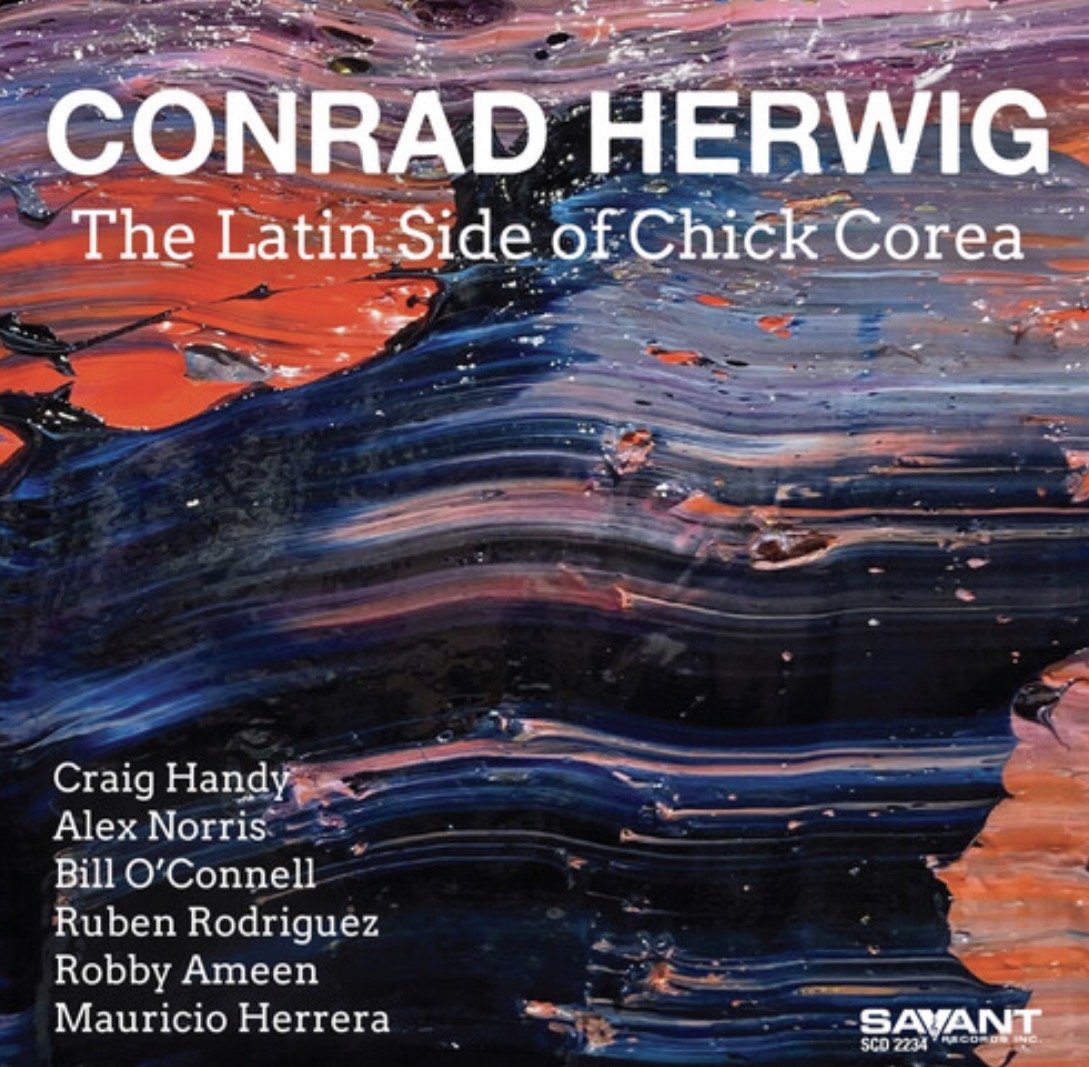
much of the source material for “The Latin Side of Chick Corea”.
Bill O’Connell and I share the arranging duties and aim to showcase the remarkable adaptability
of Chick’s music. Through Guajira, Yambu, driving Rumba, and Afro-Caribbean rhythms, we
hope that these performances continue to reveal the true genius of Chick’s compositions. Tracks
like “500 Miles High,” “Tones for Joan’s Bones,” and “Spain” burn with rhythmic energy, while
FINAL LINER NOTES— LATIN SIDE OF CHICK COREA as of: 15 of April, 2026
Album Release Date: 2026
“Windows” and “Crystal Silence” highlight his transcendental melodic depth. All of these
performances highlight the harmonic sophistication inherent in his music. “The Brain” was one
of Chick’s most complex and far-reaching compositions of the 1960s. This is the music that
defines Chick Corea’s legacy. He combined elegant simplicity with the ultimate in harmonic and
rhythmic complexity. As young musicians growing up in the late 1960s and ‘70s, these songs
were a rite of passage and modern jazz standards.
This recording features the collective energy of an extraordinary group of musicians, each
contributing their vast experience in modern jazz and Latin music to the project. Saxophonist
and flutist Craig Handy and trumpeter Alex Norris deliver powerful improvisational lines with
pianist Bill O’Connell providing a masterful harmonic foundation. The rest of the rhythm
section—Ruben Rodriguez on bass, Robby Ameen on drums, and Mauricio Herrera on
congas—lay down an irresistible and relentlessly powerful rhythmic foundation, seamlessly
blending precision, swing, and Afro-Latin-Caribbean grooves.
Our goal here? A blend of tribute, imagination, and transformation. “The Latin Side of Chick
Corea” celebrates the brilliance of Chick’s compositions and musical vision, while continuing
our now 30-year exploration of the intersection between jazz improvisation and sacred Latin Rhythmic Traditions.